
The Archive
Notes, essays, and occasional detours.
A running collection of Francis Sopper’s writing on cognition, attention, work, relationships, and the curious ways our minds make sense of the world.
← Back to newsletter
The Digital Bar Never Cuts You Off
Unsubscribe; unsubscribe; unsubscribe. Delete; delete; delete.
Jill Lepore, historian and essayist, wrote a piece that appeared in the New Yorker this week, titled The Artificial State. She is writing about the effects on our political discourse on "the digital manipulation of attention-mining algorithms" in the service of "minutely message-tested online engagement."

How to Beat the S&P 500
Hey Alexa! Send me satin pillows to cry on.
Fear and greed, folks. It's the toughest problem we humans have. I just decided not to even get started on the Garden of Eden.

Let's Stop Calling Some People Diverse. We're All Diverse.
When someone tells me they have a learning disability or a cognitive disorder, what that tells me is they find it hard to do things that are important to them.
Often a professional diagnostician has given a professional diagnosis. Sometimes they've identified with a published description of behaviors that have been assigned a name. While I know what all those names mean --I've been in the field my entire adult life -- they aren't helpful. While they may for some, accurately identify a problem: dyslexia for example, they are very loosely connected to the solution.

Disorder to Dynamic
Our work at Kairos Cognition comes from our name: Kairos: the conditions for decisive action.
The Cognition part represents the forces our brain uses for decisive action.
For thirty years now, we've been exploring those kaleidoscopic forces in order to optimize our conditions for decisive action.

Consistency: A Matter of Perspective
Last week, I promised, "You just have to go at something for ten years with consistency, correct practice, and metacognition. And you'll be surprised at what you can do after just three years."
I decided to look back at these posts. Robert and I started in January of 2017. Robert does the illustrations, I do the text. We made no promise of consistency. We promised some occasional pieces, and that's what we did.

I Never Said This Was Easy
Someone told me recently that after I had a conversation with his colleague, the colleague told him, "I got good information for the first half hour, then he went all ADD on me."
First, I appreciated the candid information. An important mentor of mine, Robert Lefton, was an advocate for candid observations. Candid reporting allows us to respond, adjust, and move forward. In addition Lefton pointed out, since we all have growing edges, if the candor doesn't sting a bit, as the observation delivered to me did, it probably isn't candid enough. The truth can hurt. Candor takes courage to deliver and courage to receive.
Your Correct Practice
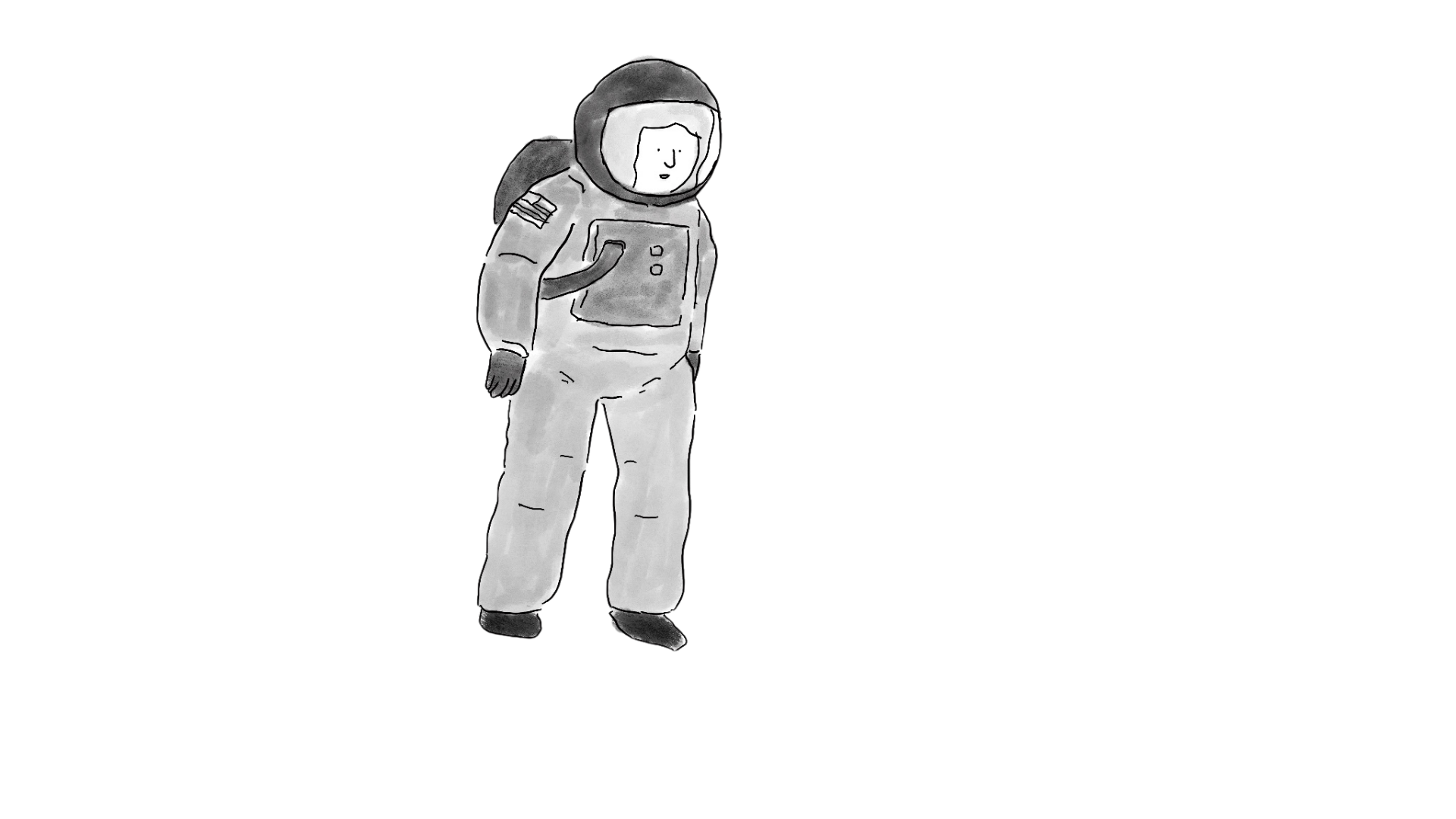
Today's post is a brief review of Astronaut Cady Coleman's book, Sharing Space.
One might think referring to someone as an astronaut would be both the ultimate and definitive thing one could say. However, with Astronaut, Air Force Lt. Colonel, MIT graduate, Chemistry Ph.D., Flute accompanist for Jethro Tull, fluent in Norwegian and Russian, parent, and now author, it's hard for me to escape the feeling, "Cady, leave something for the rest of us to do."

Embracing Unorthodox Paths to Success
Last year I wrote about the correct practice I had to find in order to catch a ball. If you haven't read it, you'll learn what a 35-year-old, half-blind, cross-eyed guy had to practice in order to reliably catch a moving object for the first time.

There's Knowledge and Then There's Practice
At the start of my senior year at my all-boys Catholic high school, the Age of Aquarius was in sunrise, and the Xaverian Brothers, like all reasonably observant adults of the time, were awakening to the realization that a profound and terrible shift had occurred -- that they no longer were in control of the culture, and that there was a grand and glorious joke that seemed to be on them.